
There’s something most people feel at some point in life, even if they don’t say it out loud:
Telling the truth isn’t always rewarded.
Not because truth has no value—but because truth often comes with a cost. And most people, in most situations, are quietly weighing that cost before they speak.
This isn’t just about governments or organizations. This is about life. About people. About how we move through relationships, work, family, and even our own inner world.
Truth sounds simple on the surface. Say what is real. Be honest. Stand in clarity. But when you look closer, you start to see that truth doesn’t exist in a vacuum. It exists inside environments—emotional, social, and practical—and those environments shape how truth is expressed.
A man might know the truth in his heart. He might see something clearly. But before he speaks, there’s a pause. A calculation.
What will this cost me?
Will this create conflict? Will it disrupt something that’s working, even if imperfectly? Will it affect how people see me? Will it change my position, my relationships, my stability?
That moment—that quiet internal weighing—is where truth often gets adjusted.
Not always turned into a lie. But softened. Delayed. Reframed. Sometimes held back completely.

And that’s where life starts to show its real nature.
People don’t always avoid truth because they don’t know it. They avoid it because of what comes with it. Because truth, when spoken fully, can break things. It can expose things. It can force change that not everyone is ready for.
So instead, people learn to manage reality rather than reveal it.
They say just enough. They shape the message. They keep things “under control.” And in many cases, that behavior is quietly rewarded. It keeps peace. It avoids tension. It maintains a sense of order.
But there’s a cost to that too.
Because when truth is consistently filtered, something starts to shift inside a person. There’s a disconnect. A subtle awareness that what is being expressed is not fully aligned with what is known. Over time, that gap can grow. Not always into something dramatic—but into something quieter. A loss of clarity. A loss of grounding.
And you see it not just in individuals, but everywhere. In conversations that never go deep. In relationships that stay surface-level. In environments where people sense things but don’t say them.
That’s not accidental. That’s cause and effect.
When truth carries a cost, and comfort carries a reward, people will often choose comfort.
Not because they’re weak. Because they’re human.

But here’s where it shifts.
There are moments in life where a person decides that the cost of not speaking the truth becomes greater than the cost of speaking it. That’s a turning point. Not loud. Not dramatic. But real.
It’s when someone says, “I’m no longer going to manage perception. I’m going to stand in what is real, regardless of the outcome.”
That doesn’t mean they become reckless. It doesn’t mean they say everything without wisdom. But it does mean they stop negotiating with what they know to be true.
And that changes things.
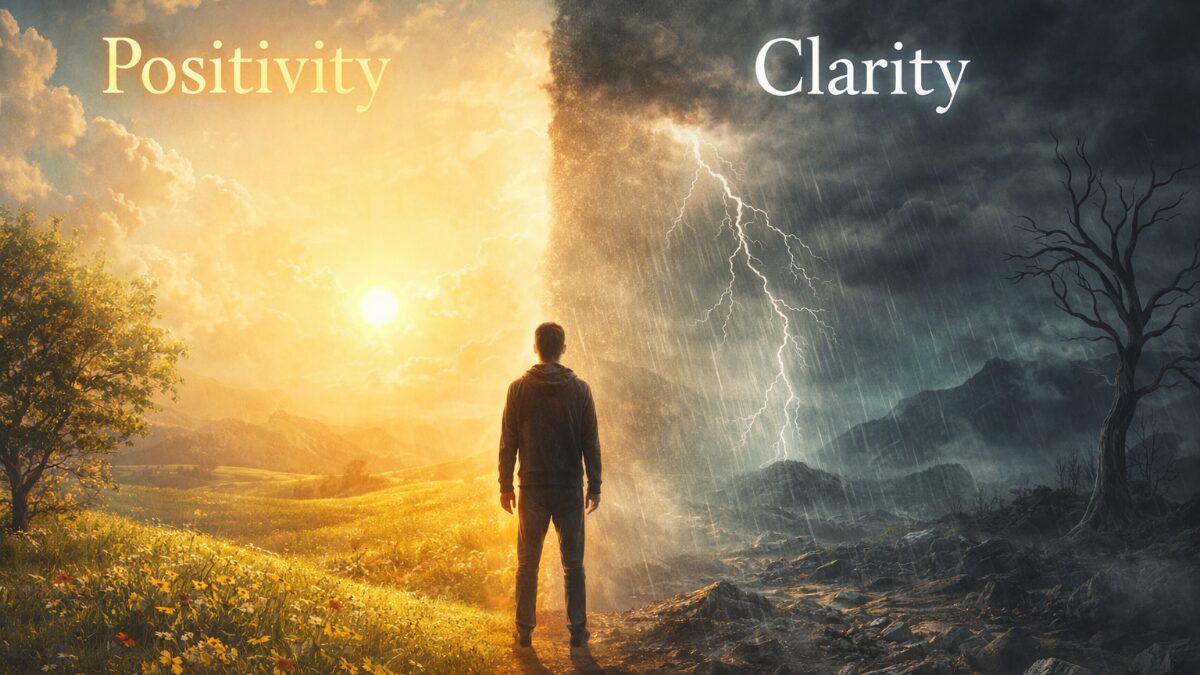
Because truth, when lived—not just spoken—creates alignment. It clears confusion. It draws a line. Sometimes it costs relationships. Sometimes it shifts direction. But it also brings a kind of clarity that can’t be faked.
And that clarity has its own strength.
The reality is, life doesn’t always reward truth immediately. Sometimes it does the opposite. But over time, truth has a way of revealing what’s real and what isn’t. It exposes weak foundations. It brings things to the surface. It forces alignment, one way or another.
That’s why this isn’t about forcing truth on others. It’s about where a man chooses to stand within himself.
Because at the end of the day, beyond systems, beyond roles, beyond outcomes—what remains is simple:
Did you stand in what you knew was true?
Or did you shape it to fit what was easier?
That question doesn’t belong to any system. It belongs to the individual. And the answer to it is what shapes not just what a person says—but who they become over time.