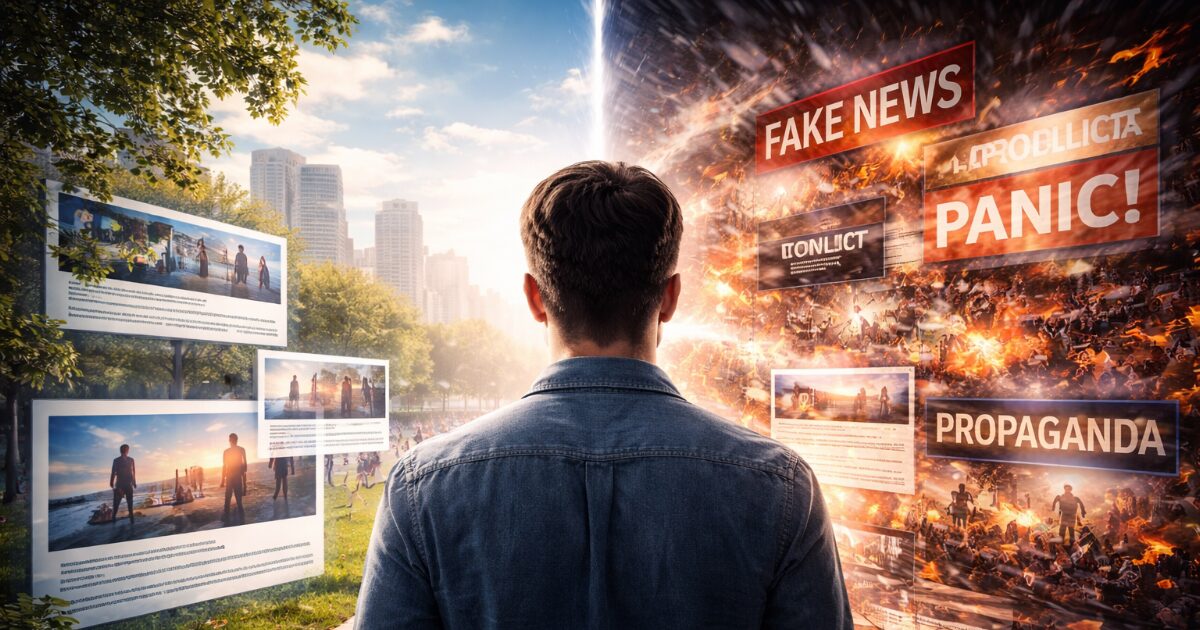
For most people, information feels straightforward.
You read a headline, watch a clip, or hear something from someone you trust—and from that, you form a conclusion. It feels immediate. Clear. Done.
But what most people don’t stop to consider is this:
Very little information is ever received in its original, untouched form.
By the time something reaches you, it has already been shaped—sometimes subtly, sometimes significantly.
Information Is Rarely Neutral
Every piece of information travels through a path.
It starts somewhere, gets picked up, interpreted, written or spoken, shared through a platform, and then finally reaches you. At each step, there’s a human decision being made—what to include, what to emphasize, what to leave out.
That doesn’t automatically make something false.
But it does mean something important:
What you’re receiving is not just information—it’s information that has already been processed.
The Filter You Don’t Notice
And then there’s your own filter.
Everyone has one.
Your past experiences, what you’ve been through, what you believe about the world, even how you’re feeling in the moment—all of it shapes how you interpret what you hear.
Two people can watch the exact same event unfold and walk away with completely different understandings of what just happened.
Not because one is lying.
But because each is seeing through a different lens.
It’s Not Just Individuals
This doesn’t stop at the personal level.
The same thing happens with organizations, media outlets, and institutions.
They also have perspectives. They have audiences. They have priorities. And sometimes, they have pressures—time, competition, expectations.
So when they present information, they’re not just reporting what happened. They’re framing it in a way that fits how they see it, or how they believe it should be understood.
That’s why you can see the same story reported in completely different ways depending on where you look.
Influence Is Real—but It’s Not Absolute
This is where the idea of influence comes in.
Some people and organizations have more reach than others. They have larger platforms, more resources, and more ability to shape what gets attention.
That influence can affect what people see and how they see it.
But it’s important to stay grounded here:
Influence is not the same as total control.
There isn’t one single group deciding everything that gets said or shown. What exists instead is a landscape of overlapping influences—sometimes aligned, often competing.
When Things Start to Feel Off
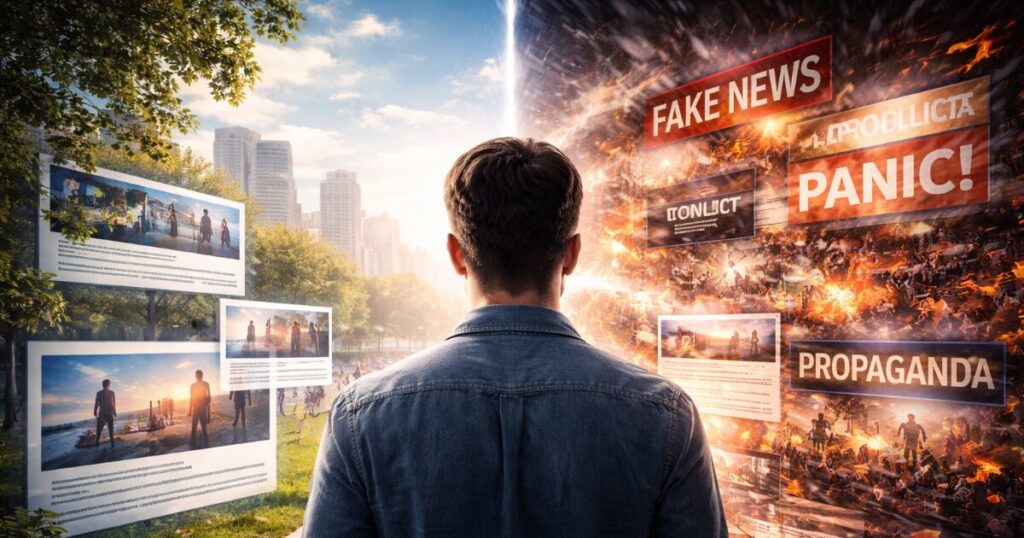
Where people start to feel tension is when there’s a gap between what they’re experiencing and what they’re being told.
You might see something happening in real time, and then see it reported in a way that doesn’t quite match. Or something important feels minimized, while something else is amplified.
That creates a kind of internal friction.
Over time, if that keeps happening, it can turn into distrust.
And once trust starts to break down, people begin looking for explanations.
The Turning Point
This is where things can go one of two ways.
Some people slow down and start asking better questions. They look at multiple perspectives, separate what actually happened from how it’s being described, and become more thoughtful in how they process information.
Others go in a different direction. They look for a single cause—something or someone to point to that explains everything at once.
It’s understandable. The world feels complex, and simple explanations feel easier to hold onto.
But they’re often incomplete.
Cause and Effect Is Real—But It’s Not Simple
You were right in noticing that influence can lead to outcomes. That part is real.
Decisions get made. Those decisions affect people. People feel the impact, and then they react.
That’s cause and effect.
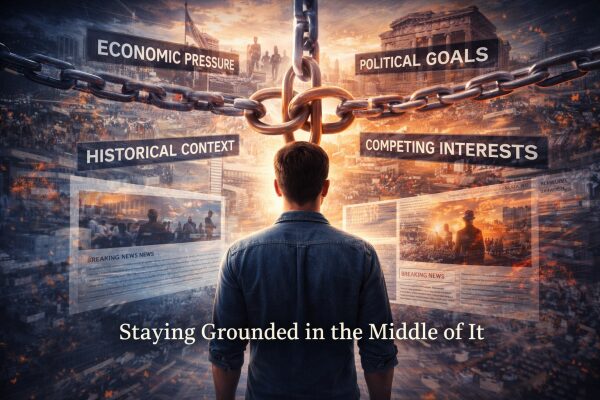
But what’s often missed is that those decisions are rarely coming from one place. They’re shaped by multiple forces—economic pressure, political goals, historical context, competing interests.
So what you end up with is not a single cause, but a chain of factors interacting.
Staying Grounded in the Middle of It
In a world like this, the goal isn’t to reject everything or to blindly accept everything.
It’s to become more aware of how information is shaped.
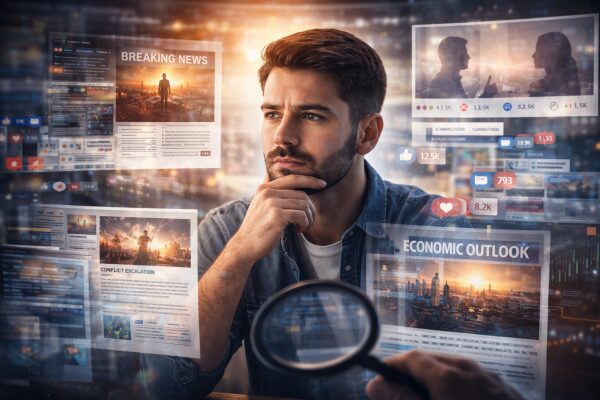
When something matters, take a moment. Look at what actually happened. Notice how it’s being described. Pay attention to what feels emphasized—and what feels missing.
That simple pause creates clarity.
Final Thought
Everyone has a filter. That’s part of being human.
The difference is whether you’re aware of it or not.
Once you see that information is shaped—by others and by yourself—you stop reacting as quickly. You start observing more clearly.