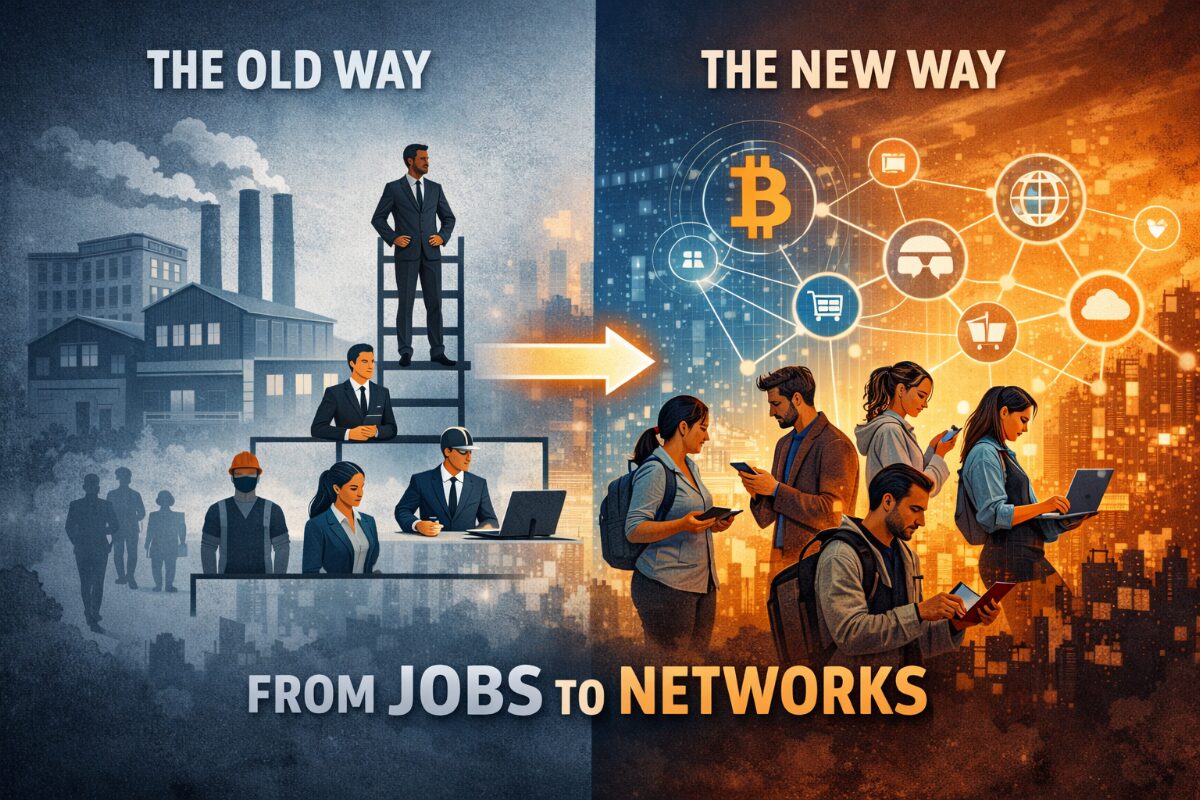
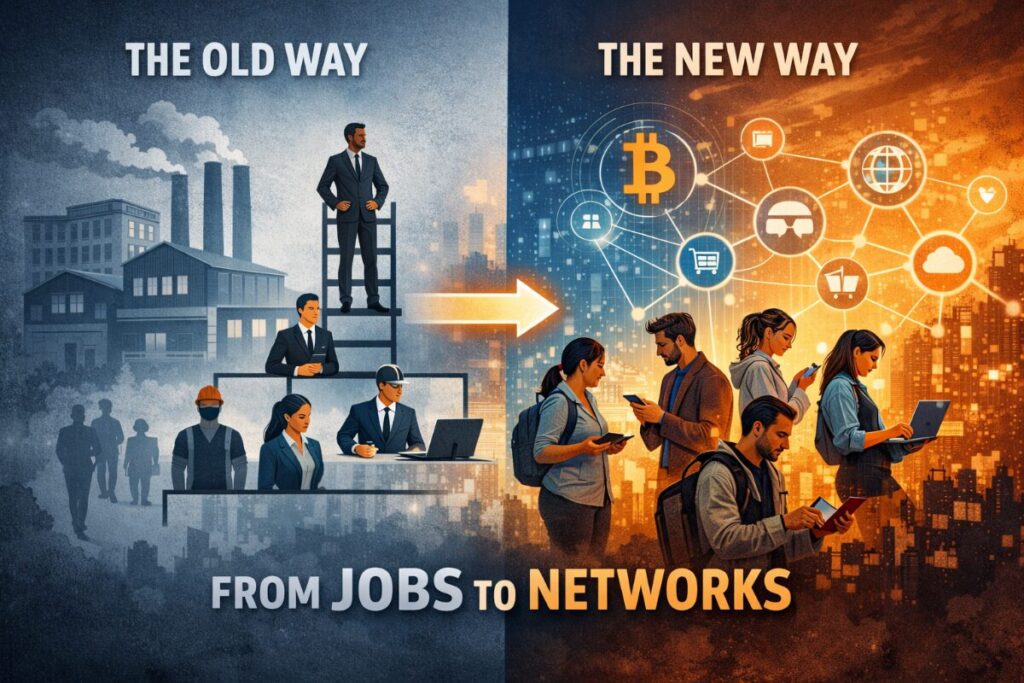
For most of modern history, the way people earned a living followed a fairly simple pattern. You went to school, learned a skill, and eventually worked for a company. Businesses hired employees, employees earned wages, and the economy moved forward through this basic relationship between employers and workers.
For more than a century, that structure worked well.
Large companies grew by hiring more people, building factories, and expanding operations across cities and countries. Entire communities were built around jobs provided by manufacturers, corporations, and government institutions. A stable job was often seen as the foundation of financial security.
But the world does not stand still.
Technology, automation, and global connectivity are quietly changing how people participate in the economy. In many industries today, machines and software are performing tasks that once required large numbers of workers. Artificial intelligence systems can assist with customer service, analyze data, manage logistics, and even write reports.
At the same time, automation continues to reshape manufacturing and transportation. Warehouses run with far fewer workers than they once did. Software replaces paperwork that used to require entire departments.
None of this means people will stop working. Far from it. What it does suggest is that the structure of work itself may be evolving.
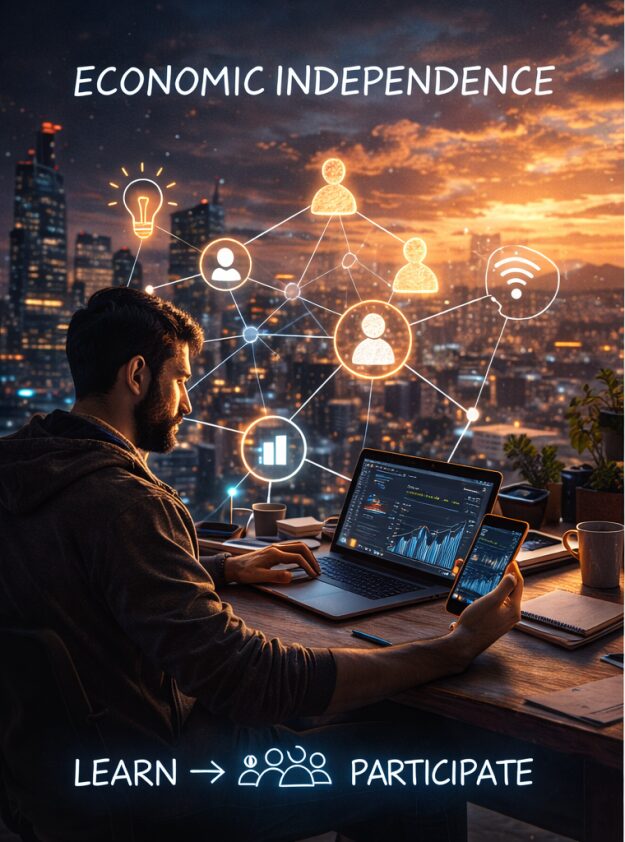
Instead of relying entirely on traditional jobs, more people are beginning to build income and participation through platforms, small ventures, and digital communities.
You can already see the shift happening.
Drivers operate independently through ride-sharing platforms. Creators earn income from online audiences. Freelancers build careers without traditional employers. Individuals sell products globally through digital storefronts.
In each case, people are not simply employees inside a company. They are participants within a system.
This leads to a broader idea sometimes described as the network economy.
In a network economy, value grows through participation. People contribute skills, knowledge, activity, or resources, and the system becomes stronger as more participants join.
Think about the difference for a moment.
A traditional company grows by hiring more employees.
A network grows by attracting more participants.
That distinction may sound subtle, but it changes how value is created.
In a company, ownership and decision-making are concentrated at the top. In a network, participation itself becomes part of the engine that drives growth.
Digital technologies have made this type of system easier to build than ever before. Global connectivity allows communities to form across borders, time zones, and industries. A small group can create something meaningful that eventually expands far beyond its original scope.
Some newer digital ecosystems are experimenting with this model in practical ways.
One example is the emerging EQPAY ecosystem.
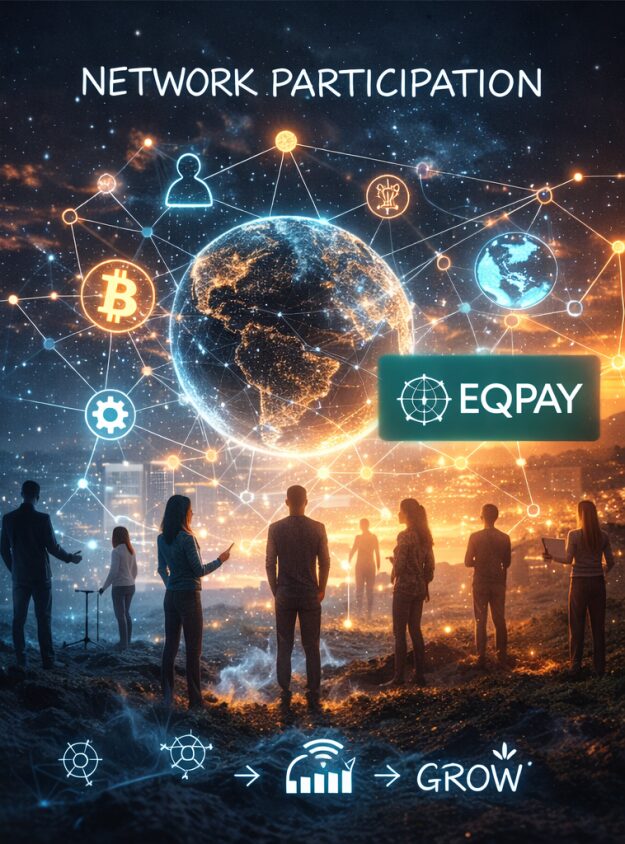
EQPAY is built around the idea of encouraging participation and education within a digital network rather than focusing only on traditional employment structures. The concept is relatively straightforward. Instead of relying solely on jobs, individuals engage with a system where learning, contribution, and community involvement become part of the experience.
Participants explore educational material, share ideas, build connections, and contribute to the broader development of the ecosystem. As the network grows, the value created by that activity can potentially circulate among those who participate in it.
In other words, the focus shifts slightly from employment toward participation.
Education plays an important role in this approach. The SpiritDetox educational platform helps introduce people to financial literacy, digital systems, and the broader ideas behind emerging network economies. The goal is not simply to present theory, but to help individuals understand how economic structures may be evolving.
For many people, this concept resonates because it encourages independence.
Not everyone wants to spend their entire life inside a rigid corporate structure. Some individuals prefer to build businesses, develop communities, participate in networks, or contribute to projects that align with their interests.
Of course, jobs are not disappearing. Society will always need builders, engineers, teachers, healthcare workers, and skilled professionals across countless fields.
But alongside those roles, a more flexible form of participation may continue to grow.
People increasingly combine several forms of economic activity at once. Someone might operate a small business, contribute to a digital network, invest in assets, and participate in online communities simultaneously.
Economic life becomes less defined by a single job title and more defined by how individuals choose to participate in multiple systems.
This is one reason many observers believe networks may play a larger role in the future economy.
Networks reward engagement, collaboration, and shared growth. As digital tools make it easier for people to connect globally, these ecosystems can expand in ways that were almost impossible just a few decades ago.
Of course, networks still depend on trust, leadership, and real value creation. Communities must provide meaningful benefits for the people who participate in them.
When those elements come together, however, networks can grow into powerful economic ecosystems.
The shift from jobs to networks will not happen overnight. Economic structures evolve slowly, often over generations rather than years.
Still, the direction of change is becoming easier to recognize.
As technology continues to reshape industries, the future economy may belong not only to companies, but also to communities, platforms, and networks where individuals participate, contribute, and grow together.